


 Back to Blog
Chat Heaven

Fri 5th Jun, 2026
I can barely sleep during spring. Millions of birds are arriving from Africa; it feels like a crime not to be out in the forests or wild hills. At this time of year all of my senses are working overtime.
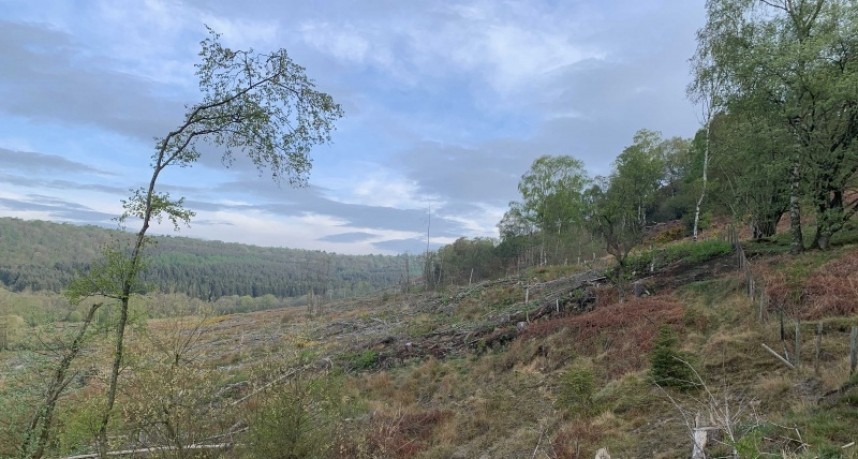
Levisham bank woodlands. Habitat of Tree Pipit, Redstart and Willow Warbler © Richard Baines
On the 5th May 2022 I was in the middle of a breeding bird survey for the North York Moors National Park at Levisham when I heard what sounded like a Corn Bunting.
I love this landscape, to my left were the big forests of Newtondale and to my right was the western escarpment of Levisham Moor. I started at 6 a.m. in the woods above the train station and I was immediately surrounded by the sounds of Tree Pipit, Garden Warbler, Willow Warbler and Redstart.
What I really wanted to find though was a Whinchat. These beautiful birds have sadly declined in my lifetime. The majority spend the winter in an area of Africa between Senegal and Uganda. The BTO cite a decline in the diversity of vegetation structure on their breeding sites in Europe as one of the main reasons for decline.
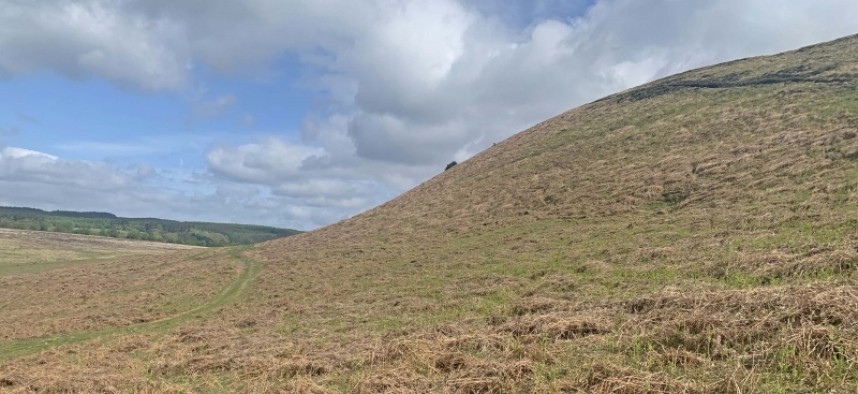
Bracken dominated bank. Levisham 5 May 2022. © Richard Baines
As I walked the lower moor and banks covered in dead tangles of Bracken, I didn’t feel very optimistic about seeing a Whinchat but what really took my attention was the number of Stonechat families.
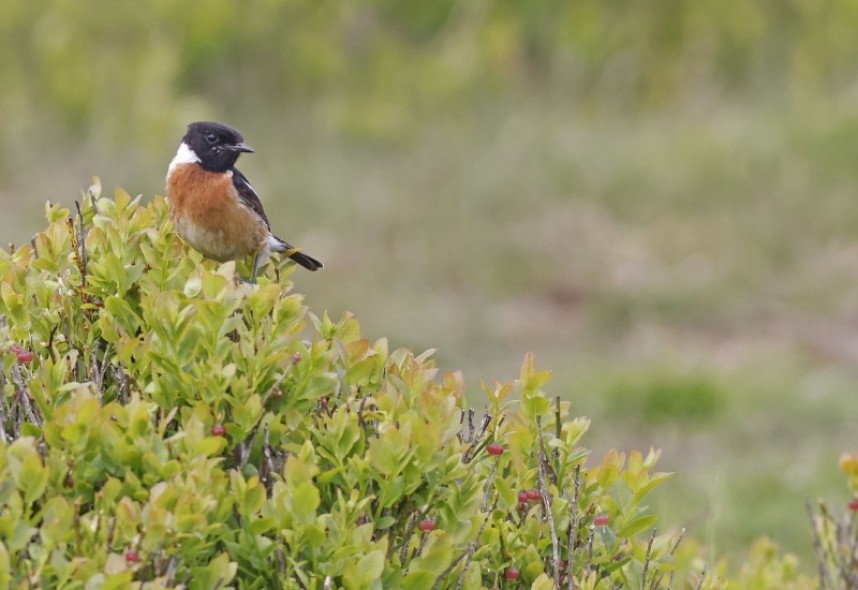
Male Stonechat 5 May 2022 © Richard Baines
At this time of year, the first broods have just popped out of the nest. They were calling in many places and by the end of my survey I had mapped a minimum of 10 family groups! It was great to see so many.
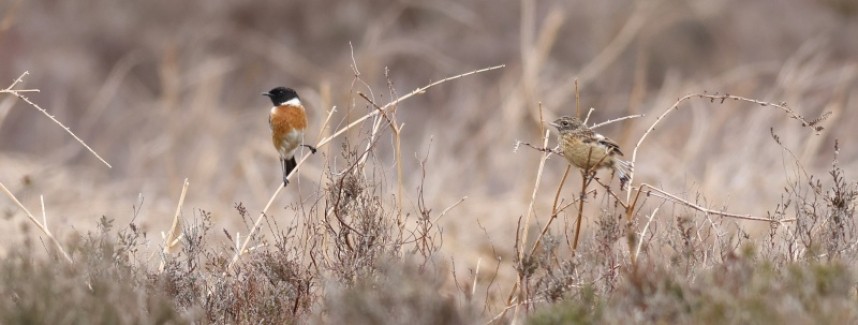
Stonechat with newly fledged juvenile 5 May 2022 © Richard Baines
Within the same habitat which was dominated by Bracken and Heather were good numbers of Yellowhammers and Meadow Pipits.
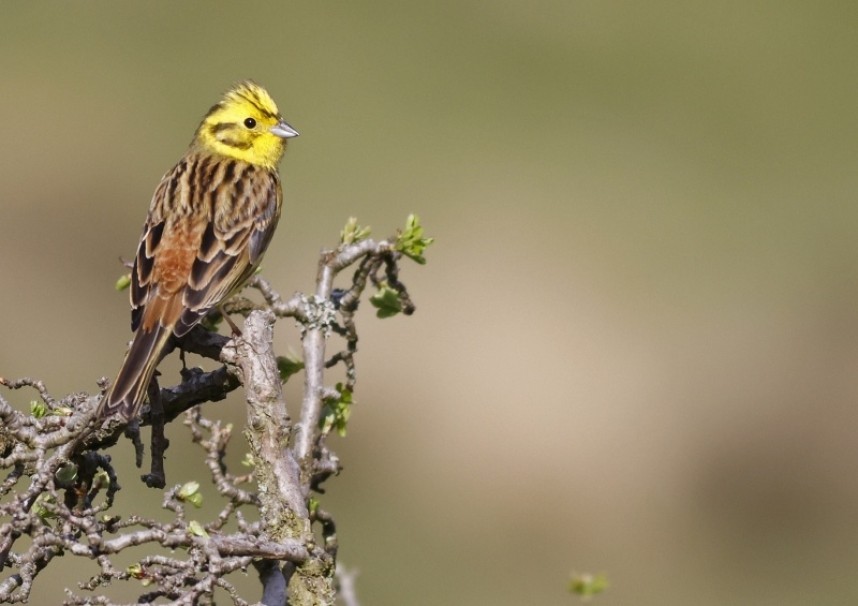
Male Yellowhammer 5 May 2022 © Richard Baines
As I walked slowly north, the bankside habitat started to change with increasing amounts of Bilberry on the slopes. I started to hear Whitethroats singing and I began to realise how common they were on the escarpment.
Then a new song, a rich musical jumble of notes with a few scratchy sounds. Amazingly I could hear Corn Bunting song and Grey Partridge within the song.
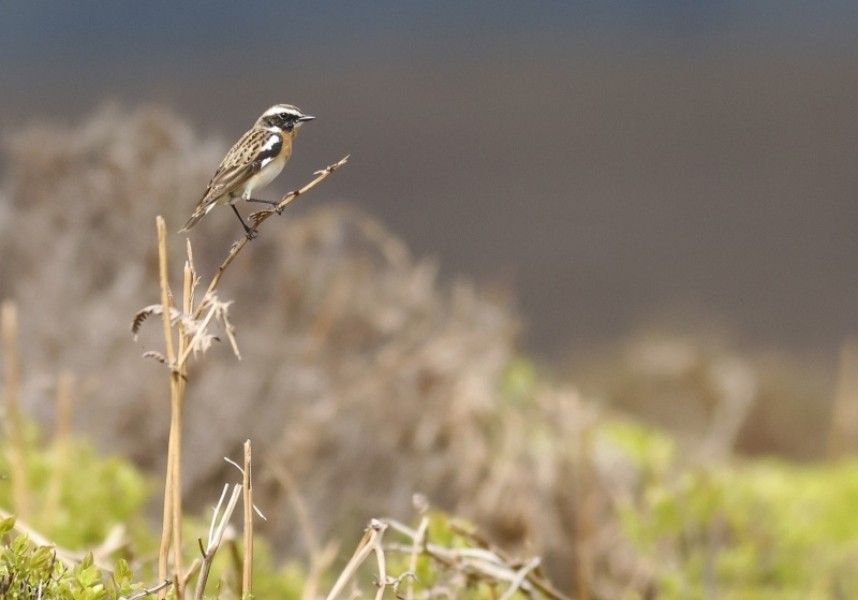
Male Whinchat 5 May 2022. © Richard Baines
This had to be a Whinchat. It took a while to find it hidden on the higher slope but then another male started singing really close to me. I dropped onto the ground and stayed very still hoping to get a photo. I was in luck as one of the males flew in and perched on a Bracken snag close by.
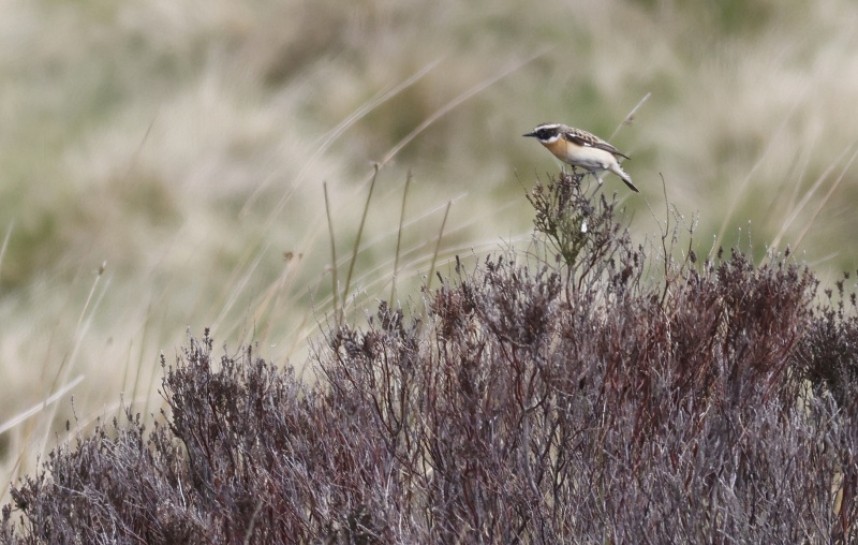
Male Whinchat on Heather 5 May 2022 © Richard Baines
After filling my camera with photos, I continued my survey feeling very pleased with my find. More Whitethroats and Stonechats calling and singing and much more Bilberry.
The slope sides slowly but surely became dominated by vivid green and I immediately thought how much my mother would have loved picking Bilberries here to make her favourite pies! Another Whinchat song in my ear and then another. Three males chasing each other and nearby a female. This was very exciting; I was in heaven listening and watching these fabulous birds.
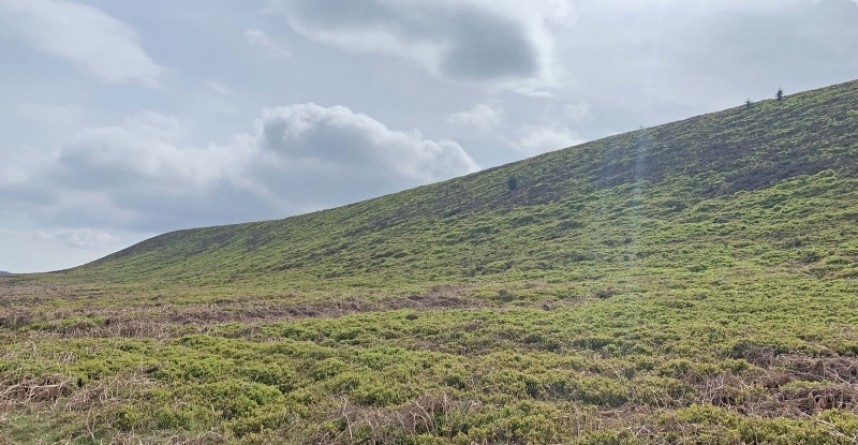
Levisham Moor western escarpment rich in deep Bilberry © Richard Baines
By the end of the survey, I was struck by how much more diversity in ground nesting birds there was after the Bilberry started to dominate the vegetation. What was also noticeable was the height of the Bilberry, how many flowers and developing berries there were on the shrubs. These were healthy, lush plants offering excellent woody structure ideal for building a nest. Amongst the Bilberry some dead Bracken afforded perching points which was perfect for male Whinchats and Stonechats, and on the lower slopes tall heather added another great option for these birds.
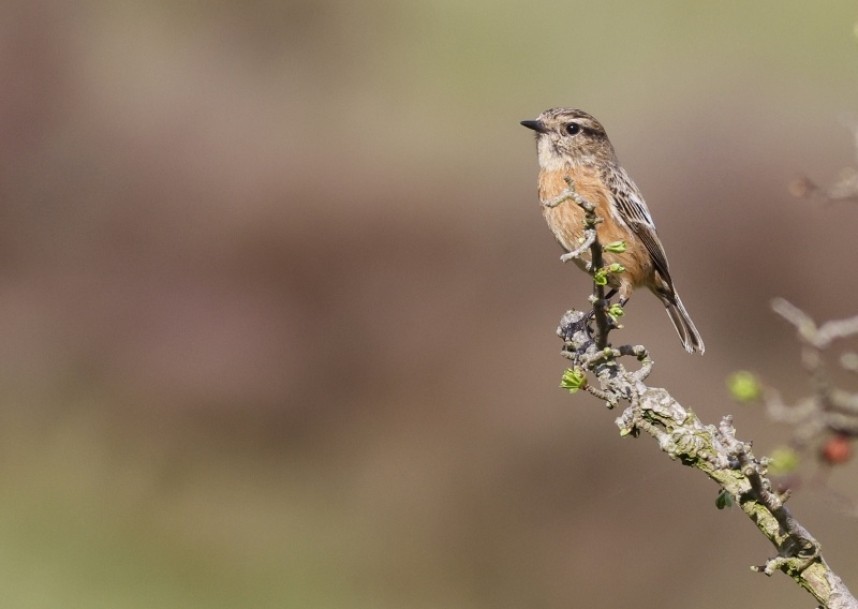
Female Stonechat 5 May 2022 © Richard Baines
On my walk back on the lower slopes I found the same change in song diversity, as the Bilberry slowly vanished and the Bracken took over, I also lost the Whinchat and Whitethroat song. When these birds arrive from Africa, they need lush, woody, tight and low growing scrubby vegetation. Bracken and even tall Heather may not be good enough on their own.
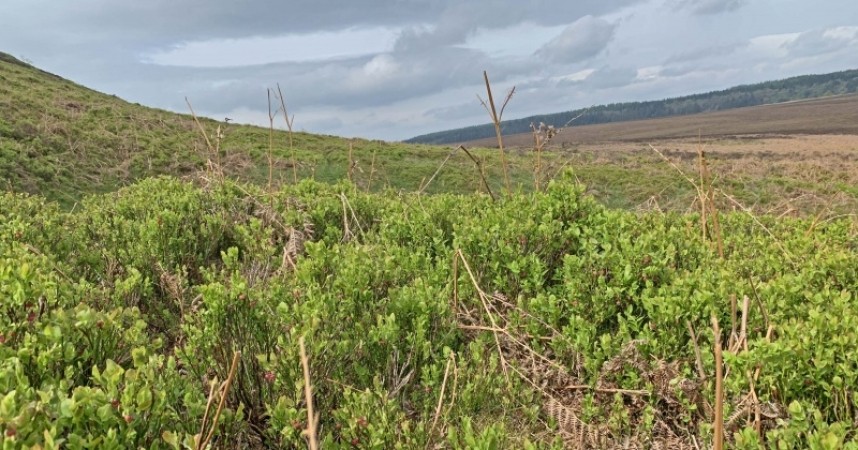
Deep Bilberry and Bracken snags. Levisham © Richard Baines
Bilberry is very common in the North York Moors National Park but in many areas the shrubs are low and tight to the ground having been over grazed or burnt. Changes in grazing intensity are likley to have contributed to declines in these and many other songbirds on the moors. In Whinchat city it’s all about woody structure!
Richard Baines
Yorkshire Coast Nature