

 Back to Blog
Time and Space for Curlews

Thu 2nd Apr, 2026
I have grown up with the haunting sound of Eurasian Curlews inspiring my senses and lifting my spirit. In my memory they have always been there... On many walks I have been followed by a ‘courlieu’. From the valleys and moors of the North York Moors National Park (NYMNP) to the lowland flood meadows by the River Derwent.
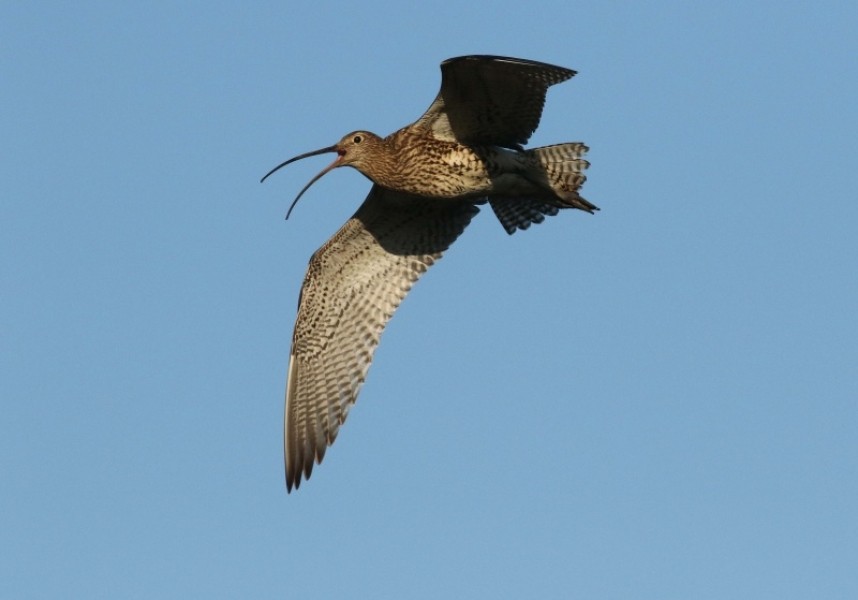
Eurasian Curlew singing in the North York Moors National Park © Richard Baines
But in recent years many of these fields have fallen silent. I don’t need to read the stats to know these amazing birds are in trouble, I can hear the loss with my own ears.
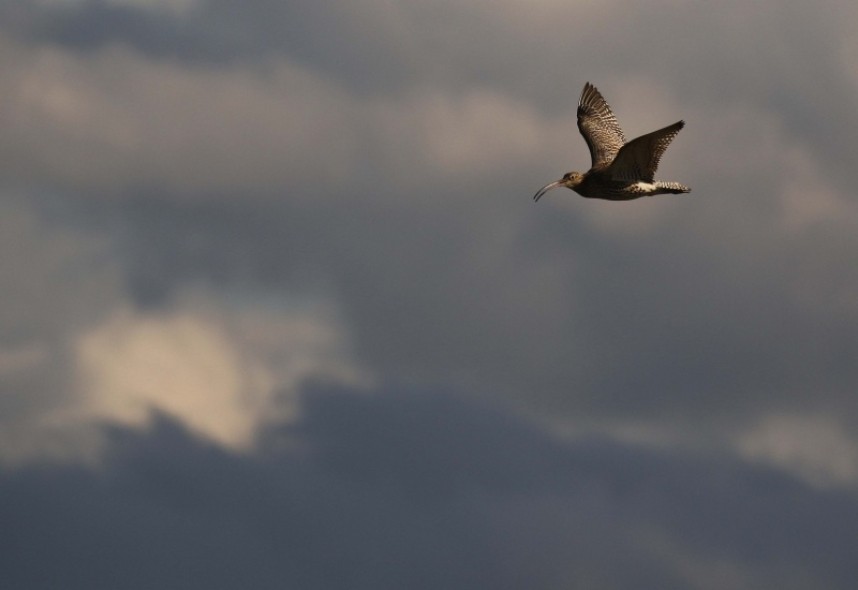
Eurasian Curlew over dark skies in the North York Moors National Park © Richard Baines
In my work I am lucky enough to meet some wonderful farmers and landowners who actively try to help the of fortune for these and many other ‘farmland’ birds. I remember one memorable encounter in May 2021. I rolled up at a farm to carry out bird surveys for the NYMNP and was greeted by an enthusiastic farmer. When I meet someone, who tells me he wants to do anything he can to help wildlife I am naturally inspired to invest more time and encouragement to help their work.
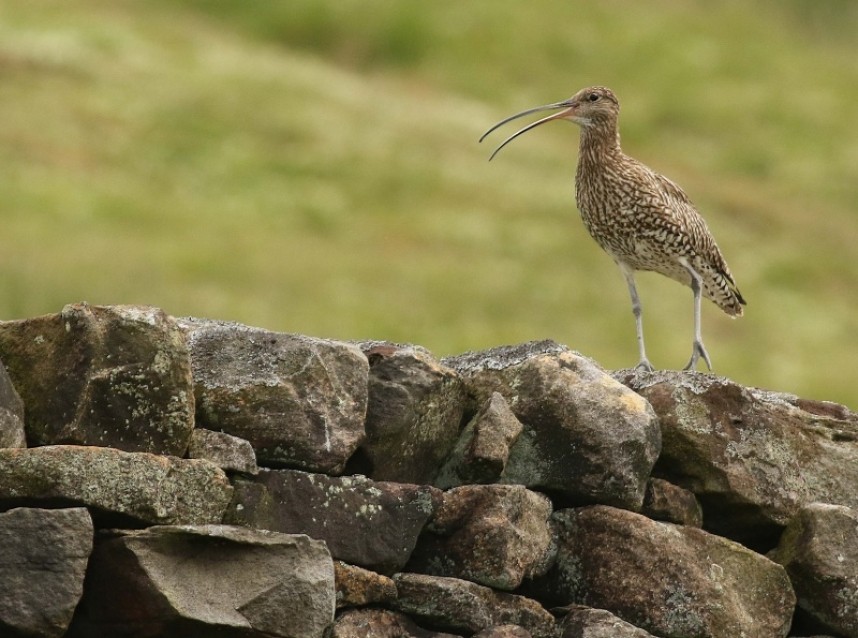
Eurasian Curlew warding off intruders North York Moors National Park © Richard Baines
Nestled in a wide valley of small grass fields, flanked by moorland on the higher ground near Danby, this small farm was full of birds. At least four pairs of Barn Swallows flew out of the stock yard as I got out of the car followed by the wonderful sound of Northern Lapwings and Curlews singing nearby.
On my second visit in June the same fields had changed beyond recognition. The short grass with few flowers had grown into a beautiful swaying sward, awash with delicate colours. And there in the same fields were the Curlew I found in May, but this time they were protecting a precious youngster.
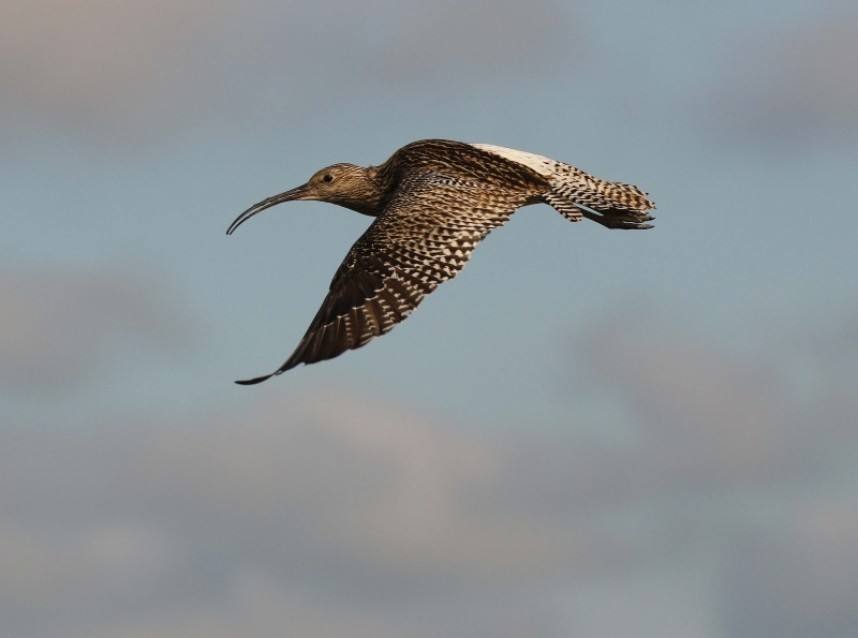
Eurasian Curlew over the North York Moors National Park © Richard Baines
The mosaic of both short and tall grassland created a perfect environment for the juvenile to hide. Just as importantly the farmer had left a wet corner in the field where soft mud provided a home for invertebrates. This simple choice by the farm to protect a small area of wet ground created excellent feeding habitat for the Curlew family.
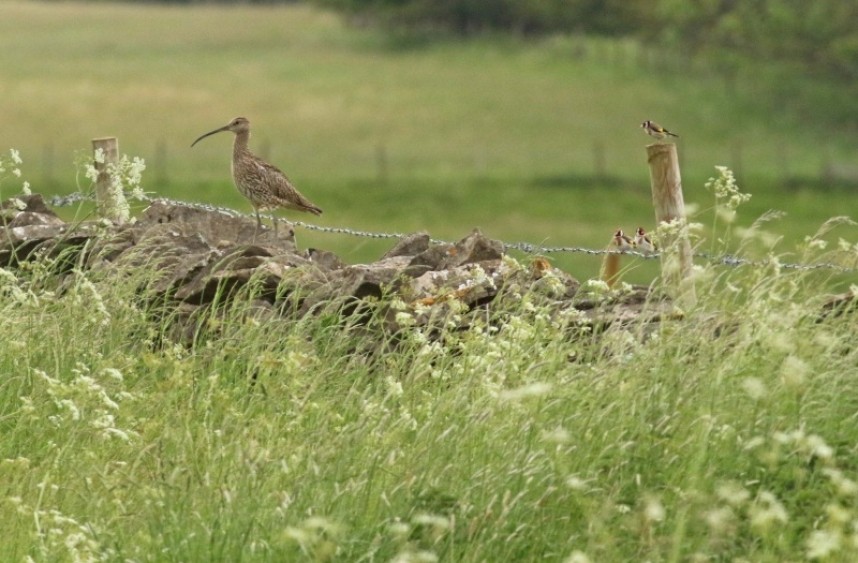
Eurasian Curlew and Goldfinches by a meadow rich in wild flowers North York Moors National Park © Richard Baines
The farmer had grazed some of the fields earlier in the spring with small numbers of sheep then moved the grazing to allow the grass to develop and recover. In other adjacent fields he had resisted pressure to take a silage cut at the end of May. Instead, he left the fields to develop with a view to cutting for hay later in the summer or early autumn. This simple balance of farming with nature created a huge benefit for wildlife.
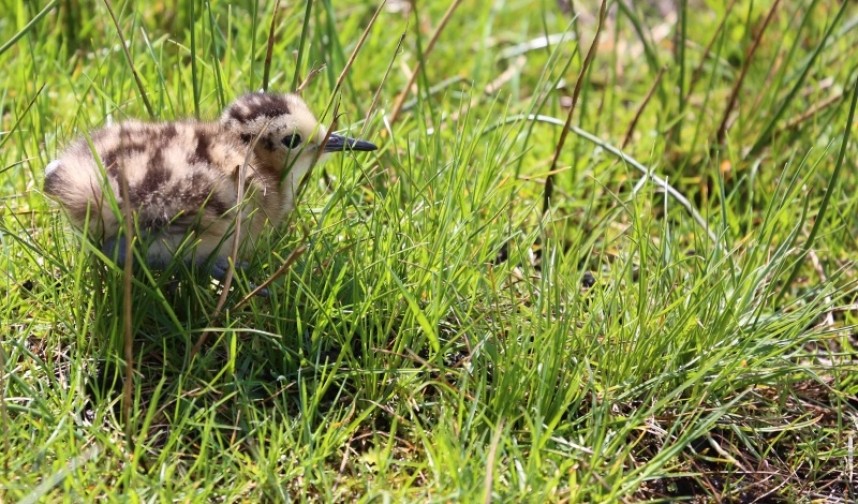
Eurasian Curlew chick in the North York Moors National Park © Richard Baines
A silage cut of all the hay fields at the end of May would have either left the Curlew chicks vulnerable to predators or killed them along with many other ground nesting birds such as Eurasian Skylarks. Watching closely where the Curlew and Lapwing were on his farm allowed him to achieve that balance.
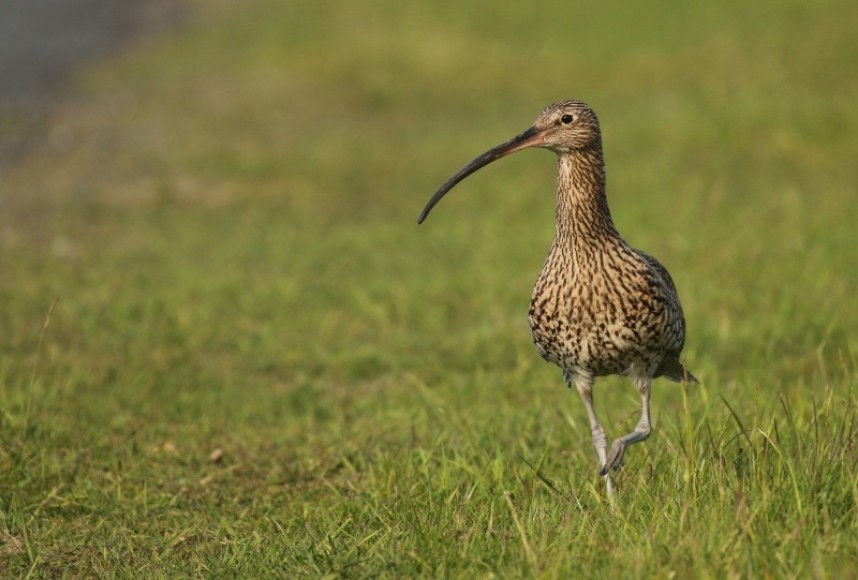
Eurasian Curlew by a road in the North York Moors National Park © Richard Baines
Inspired by his work I looked out across the valley from above his farm for other signs of this balance. Sadly, many of the fields had been cut with virtually no sign of safe fields for Curlew. Not surprisingly these fields were the ones with large numbers of Crows and Gulls feasting on the remains of nesting birds.
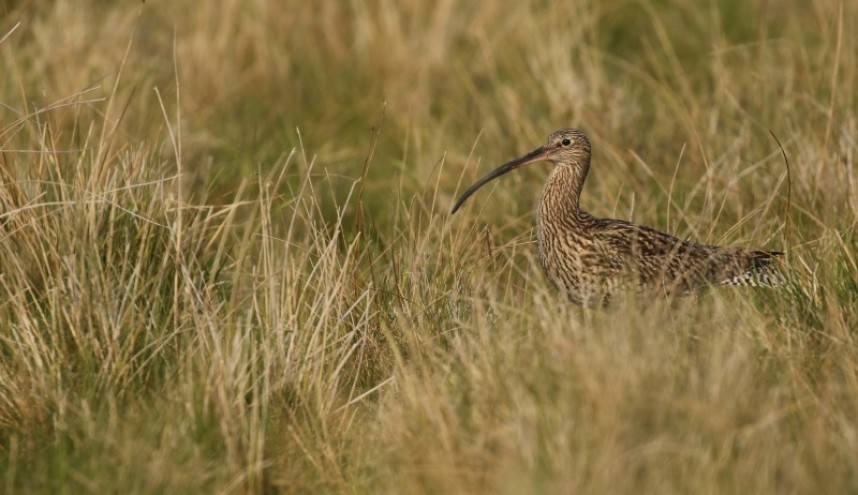
Eurasian Curlew in tussocky grassland on the moorland North York Moors National Park © Richard Baines
Many people travel to the North York Moors every spring to enjoy the amazing landscapes and wildlife, I sincerely hope we can help our natural heritage by putting a higher value on wildlife. Communities need sustainable local advice and long-term financial support otherwise these inspirational farmers will be lost along with these amazing birds.
Richard Baines
Yorkshire Coast Nature