


 Back to Blog
My Favourite Yorkshire Birding Day 2025 - Margaret Boyd

Mon 29th Dec, 2025
It was the 5th May when my heart burst as I heard the first Tree Pipit of the year. A couple of weeks later after a few visits to the Wykeham forest area, searching a returning male out in familiar spots, I was becoming worried that the woodland habitat has been changing and no longer appealing to this bird of forest edges and clearings.
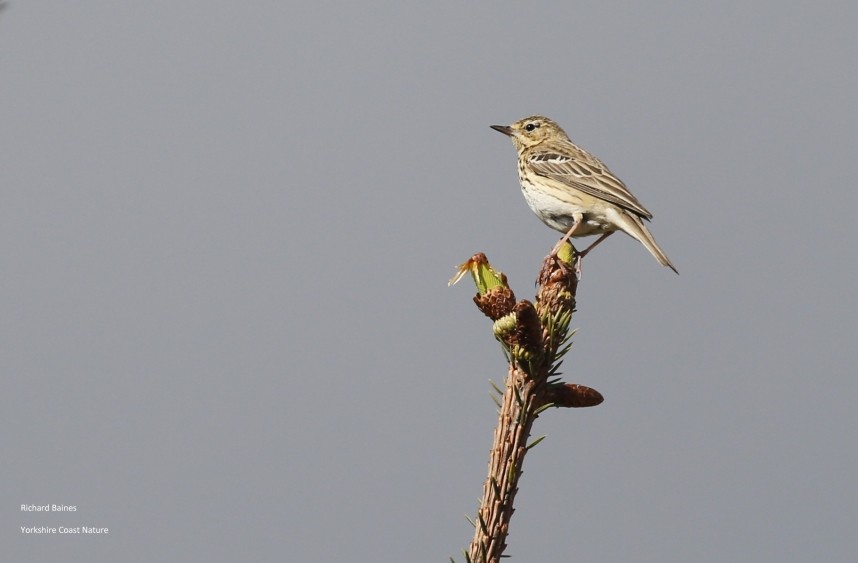
Tree Pipit - North Yorkshire © Richard Baines
The Raptor viewpoint car park in Wykeham Forest was unrecognizable, but this vast area was to be the best place for Tree Pipits this year. As my YCN Forest and River Birding Day group approached the new clearing, heading to the viewpoint for a chance of some raptor action, most of us were reeling from the sense of destruction that clear felling of a commercial forest can be like. However, it only took seconds to hear the descending scale of trills from a displaying male to refocus my attention and look upwards, catching a glimpse before it landed on one of the lone standing fir trees, an oddity in the apparently desolate landscape. And such a beauty, really one of my favourite birds and a nice specialty of the forest to show visitors.
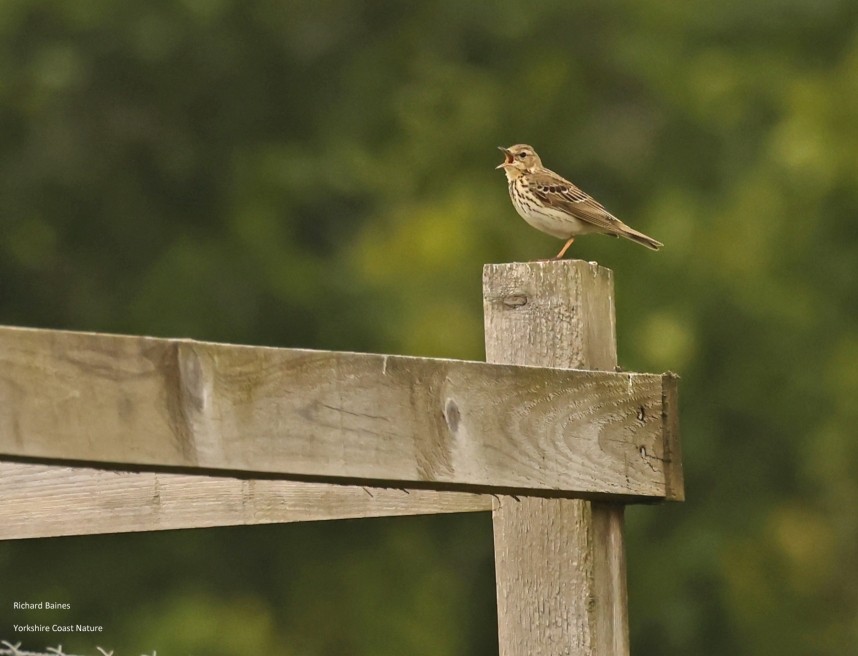
Tree Pipit © Richard Baines
Sitting out in the open, high in the uppermost branches many of the distinguishing features were clearly visible. Tree Pipits can be so obliging, this individual, maybe only just arrived a few days prior, was using all his energy to continually put on his enthusiastic display, landing on the same tree each time. Their display flight is mesmerizing, launching themselves high into the air, singing sometimes from the moment they leave their perch, then opening up their wings, flicking up their tails and dangling their legs they then proceed to parachute downwards, back to a perch. We had discovered this male, at his busiest time. When I returned a few weeks later, although still displaying there was more feeding action as a distinct pair were seen on the hunt for insects in between the felled trees and grassy tussocks.
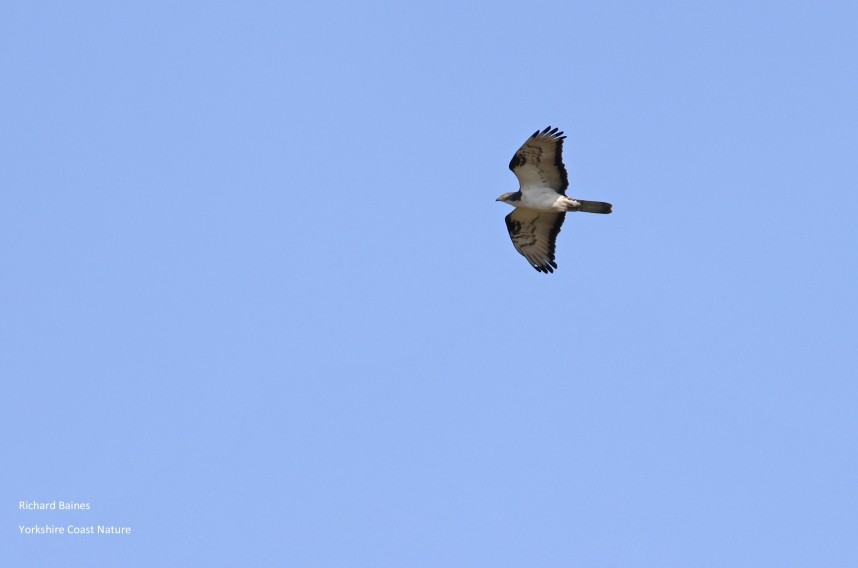
European-honey Buzzard - North Yorkshire © Richard Baines
Having torn ourselves away from the singing Tree Pipits, we headed to the ridge overlooking Troutsdale with talk turning to the possibility of catching sight of another summer migrant to the forest, this time a much rarer breeding bird, one that takes more luck than judgement, often the case when finding raptors, who don’t need to be constantly out feeding or singing.
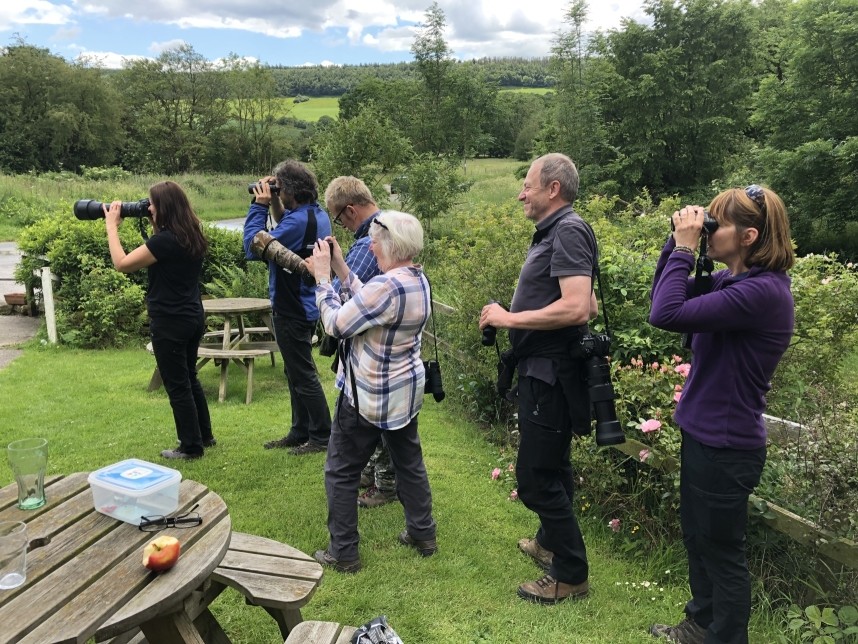
Margaret leading one of her Forest and River Birding Discovery Days
European Honey-buzzards have been breeding in the North Yorkshire Forests for a number of years and every year, conditions prevailing you get a superb view and this trip was going to be one of those days. Looking northwards, scanning the far distance and picking up a couple of soaring Common Buzzards, a shout went out of “Honey!”, looking up and behind us came a fantastic male bird, stretching out his pale grey head, the light catching its white markings, contrasting with the dark barring and really showing the dark band across the base of the tail. But within minutes it had passed over and gone. Sometimes we only get these glimpses but heightened by the preceding conversation and discussions we were able to process all those intricacies and register that we had just enjoyed a very special moment. Contrast this to the obliging Tree Pipit less than an hour before.
The day continued to deliver a range of forest species, both summer migrants and resident breeding birds, all in full song, defending territories and pairing up, even nesting building; the forest at its best.
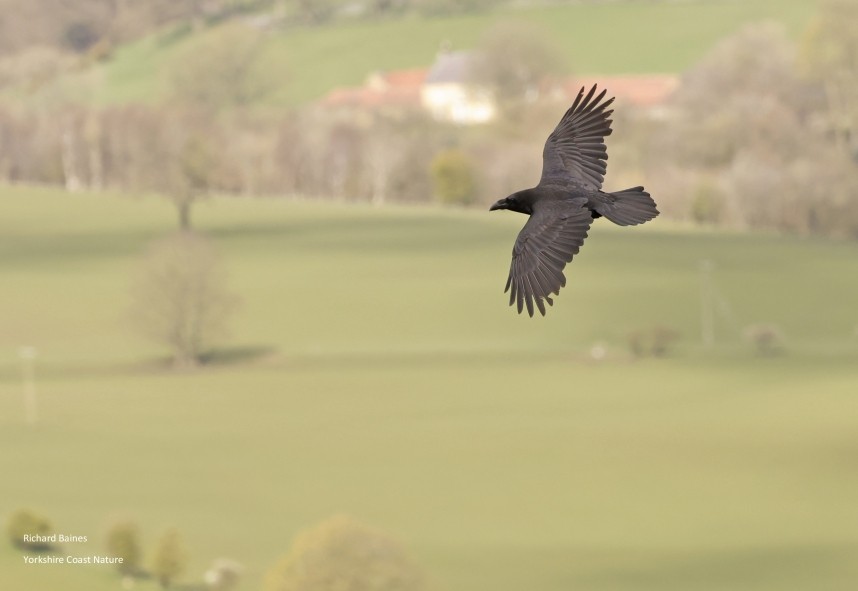
Northern Raven - North Yorkshire © Richard Baines
One pair of birds that I was keen to check on to see whether their presence was more than a single sighting was a possible pair of Northern Ravens. Last year a pair had bred in one of the gulleys leading off Troutsdale, this pair were nearer the bottom of the valley. As we walked towards the area at the end of the day, the tell-tale deep throated, hollow “korrp” echoed around the dense stands of pines. It appeared to be coming closer but this huge corvid was strangely blending into the dark background of the conifers, making it hard to pick up, then it just edged into the bright horizon, and luckily, we were all able to then follow it, tracking its course up the side gully before it landed on a side branch of one of the conifers. An ideal opportunity to set up the scope and soak up the sight of this magnificent corvid, now extending its range and hopefully being the second successful pair of breeding Ravens in Troustdale.
A fabulous day full of great wildlife experiences for me and my YCN Forest and River group.
YCN Wildlife Guide